
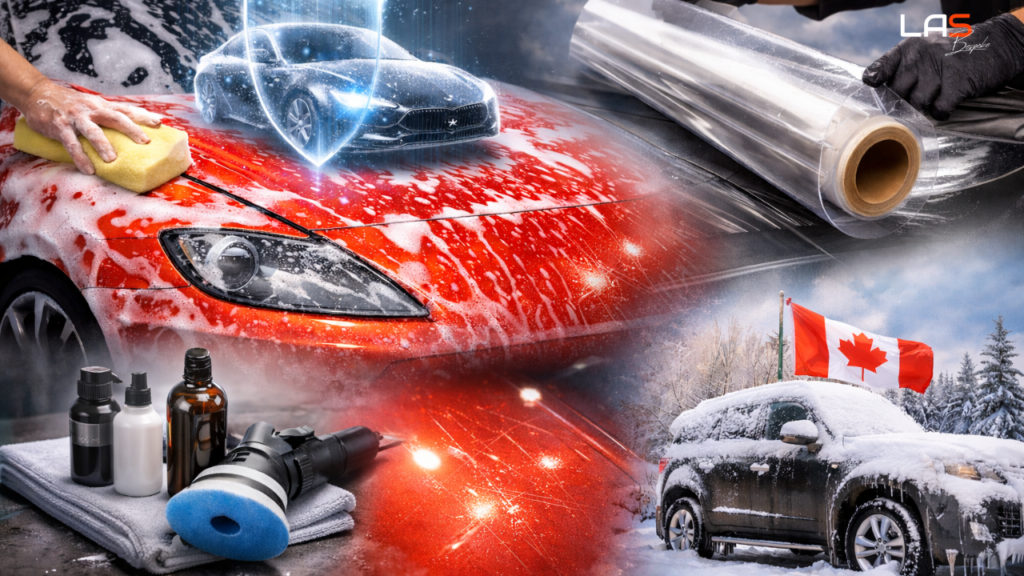
If you live in Canada, your vehicle faces some of the harshest driving conditions in the world. From road salt in winter to rock chips on highways and UV exposure in summer, protecting your paint is not optional it’s an investment.
Yet there’s still a lot of confusion around ceramic coating and paint protection film (PPF). Let’s break down the top 5 myths Canadian car owners believe and what’s actually true.
Myth 1: Ceramic Coating and PPF Are the Same Thing
This is the most common misconception.
Ceramic coating and PPF serve different purposes:
Ceramic Coating
- Liquid polymer applied to paint
- Bonds chemically to clear coat
- Adds gloss and hydrophobic protection
- Protects against UV rays, dirt, salt, and minor swirl marks
- Does NOT stop rock chips
Paint Protection Film (PPF)
- Thick, transparent urethane film
- Physically absorbs rock chips and scratches
- Self-healing top layer (on premium films)
- Provides impact protection
What Canadian Drivers Should Know:
If you drive in cities like Vancouver, Calgary, or Toronto where highways and winter debris are common, PPF protects against rock chips. Ceramic coating enhances gloss and makes winter maintenance easier.
Many vehicle owners combine both for full protection.
Myth 2: Ceramic Coating Makes Your Car Scratch-Proof
Ceramic coating is strong but it does not make your vehicle bulletproof.
It adds hardness to your clear coat, which helps reduce:
- Light swirl marks
- Minor wash scratches
- Chemical stains
- Salt corrosion
However, it cannot:
- Stop deep scratches
- Prevent rock chips
- Protect against accidents
In Canadian winters, road salt and sand are aggressive. Ceramic coating helps resist corrosion and makes cleaning easier, but physical impact protection still requires PPF.
Myth 3: PPF Turns Yellow in Canadian Weather
This was true 15+ years ago with older films.
Modern premium films from brands like:
- XPEL
- 3M
- Avery Dennison
are engineered with UV inhibitors to resist yellowing.
However, not all films are equal. Lower-grade PPF can discolor over time, especially under extreme temperature changes common in Canada.
High-quality PPF installed correctly should maintain clarity for many years even through snow, salt, and summer heat.
Myth 4: Ceramic Coating Eliminates the Need for Washing
No protection system eliminates maintenance.
Ceramic coating makes your vehicle:
- Easier to wash
- Faster to dry
- More resistant to dirt buildup
- Less prone to water spots
But Canadian conditions especially winter road grime still require regular washing to prevent salt damage.
The difference? A coated car cleans up dramatically easier compared to unprotected paint.
Myth 5: PPF and Ceramic Coating Are Only for Luxury Cars
Many Canadians believe protection is only for exotic or high-end vehicles.
In reality, protection makes even more sense for:
- Daily drivers
- SUVs
- Pickup trucks
- Fleet vehicles
- Leased cars
With new vehicle prices rising across Canada, protecting resale value is financially smart.
If you plan to keep your vehicle long-term or want to maintain trade-in value, protection is a practical investment not a luxury upgrade.
Ceramic Coating vs PPF: What’s Best for Canadian Drivers?
Here’s a quick comparison tailored for Canadian conditions:
| Feature | Ceramic Coating | Paint Protection Film |
|---|---|---|
| Rock Chip Protection | No | Yes |
| Scratch Resistance | Minor | Moderate (self-healing) |
| UV Protection | Yes | Yes |
| Salt Resistance | Yes | Yes |
| Gloss Enhancement | High | Moderate |
| Cost | Lower | Higher |
| Best For | Easier cleaning & shine | Physical protection |
Ideal Setup for Canada:
- High-impact areas (front bumper, hood, fenders): PPF
- Entire vehicle: Ceramic coating for gloss and hydrophobic protection
This combination provides the best protection against Canada’s climate extremes.
Why Canadian Weather Makes Protection Essential
Canada’s environment is unique:
- Winter road salt accelerates corrosion
- Gravel highways cause rock chips
- UV exposure fades paint
- Temperature swings expand and contract materials
Without protection, paint deterioration happens faster than most owners realize.
Final Thoughts
Ceramic coating and paint protection film are not competing products they complement each other.
For Canadian drivers who want:
- Long-term paint protection
- Easier maintenance
- Higher resale value
- A deep, glossy finish year-round
Understanding the difference between myths and facts helps you make the right decision.